United Gamers Esports Platform
How the founder/player gap got closed, and the seed round closed with it
The mismatch
Founders building "Duolingo for League of Legends" who had never lived inside the game. A science-backed model that didn't know what its player actually felt.
Why me
Five years streaming and creating content in League of Legends. I wasn't arguing from frameworks. I was arguing from the seat the product was being built for.
What shifted
Low-poly, not because it looked good, but because a casual player won't wait 3 minutes for an app meant to teach them a 30-minute game. First match in under 60 seconds.
The receipt
€250k seed. The pitch worked because the product finally felt like it belonged to the player it was talking to.
1. The room where two people figured out the same thing at the same time
Halfway through the second meeting, one of the executives stopped mid-sentence, looked at me, and said something close to: “You’re already the player we’ve been writing for.”
That was the moment the project changed. Not the redesign. Not the pivot. That sentence.
United Gamers had a thesis worth funding: a science-backed esports training platform: structured exercises, performance coaches who’d worked with Formula 1 pilots, a Duolingo-shaped progression layer for League of Legends. The founders were younger than the average LoL veteran, sharp on the methodology, and serious about the science. What they hadn’t done was log thousands of hours inside the game they were trying to teach. They were writing a curriculum for a player they’d studied, not a player they’d been.
I’d been that player for five years. Streaming. Content. Climbing ranked at the hours nobody talks about. I knew exactly what it felt like to open something that promised to make me better, watch a 3-minute load bar, and uninstall before the first session began. Not because I didn’t want to improve. Because the app had broken the contract before it ever asked for my time.
That gap, between the founders’ theoretical player and the actual one, is what was killing the product. Not the engineering. Not the budget. The fact that the team building it was further from the user than they realized.
Vision: brilliant. Execution: built for someone who didn’t exist.
When I joined as Product & UX Strategist, the company had been at it for a year. The MVP was, on paper, exactly the product they’d raised on the promise of:
- Heavier than League of Legends itself. Three to five minutes to load on a normal PC.
- Visually trying to imitate Riot’s high-fidelity art with a fraction of Riot’s budget. The result read as unfinished, regardless of effort.
- Retention on the floor. Crashes mid-session. Bugs in the core loop.
- Undemonstrable to investors. You don’t pitch a product that doesn’t open.
The runway was getting short. Funding wasn’t a luxury. It was survival. And no one funds a broken product, no matter how good the deck reads.
A facelift wasn’t going to save this. The product needed to start telling the truth about who it was for.
2. Why the founders gave the wheel to the streamer
My job wasn’t to make the app prettier. It was to close the distance between the people building the product and the person it was supposed to serve. Concretely, three things:
- Make it actually run. No crashes, no patience tax, no apology paragraphs in the onboarding screen.
- Make the core experience visible. The expert-designed training had to be the thing the user touched, not the thing buried under five menus.
- Make the vision tangible enough that an investor could feel it. Not read it. Feel it.
I didn’t open Figma first. I opened the conversation.
The questions I came in with weren’t UX-school questions. They were player questions:
- Why does this open slower than the game it’s teaching me?
- If I’m a casual ADC main on a 2018 laptop, does this app respect my time or insult it?
- What’s the one thing this product has to do, on the first session, for a player to come back tomorrow?
The founders had been answering those questions theoretically. I’d been living the answers. That’s why, in that meeting, the wheel got handed over. Not because I had the better framework. Because the product had finally found someone in the room who’d been the user.
[!important] When the people building the product can’t model the user from memory, you don’t need a better methodology. You need someone closer.
3. Three failures, all rooted in the same gap
I ran the audit. Three things were broken. Different on the surface. Same root underneath: nobody on the team had played the role of the user long enough to feel the cost of these decisions in their hands.
Failure #1: Building for hardware the player didn’t have
The team was rendering high-fidelity character models because Riot does. Riot is a billion-dollar company with engine engineers. United Gamers was a seed-stage startup. The asset pipeline ate the runtime alive.
- Install size: larger than the game it was attached to.
- Cold start: 3–5 minutes on average hardware.
- Audience contradiction: the casual player they were targeting played LoL on whatever PC they had. The training app demanded a gaming rig to run.
A casual player will not wait three minutes for the homework version of a game they were planning to play casually. I knew this because I’d been that player. The team knew it intellectually. The product still got built the other way.
Failure #2: A visual identity stitched together from the wrong reference
When you copy a AAA art style on a seed-stage budget, you don’t get AAA. You get a moodboard with seams. Some screens looked sharp. Others looked like placeholder. There was no shared visual language because the reference was unreachable.
Investors aren’t art critics, but they read coherence as competence. Incoherent visual = incoherent team, in the room. Doesn’t matter if it’s true.
Failure #3: A scope that hid the actual product
The MVP was trying to be five products. Training modes. Social. Rankings. Achievements. A marketplace. None of them finished. None of them load-bearing.
The founders had built the surface area of the eventual product instead of the proof of the current one. Every player who downloaded it had to figure out what they’d just installed. Every investor had to be told. A product that needs translation isn’t ready to be funded.
4. The pivot the room earned together
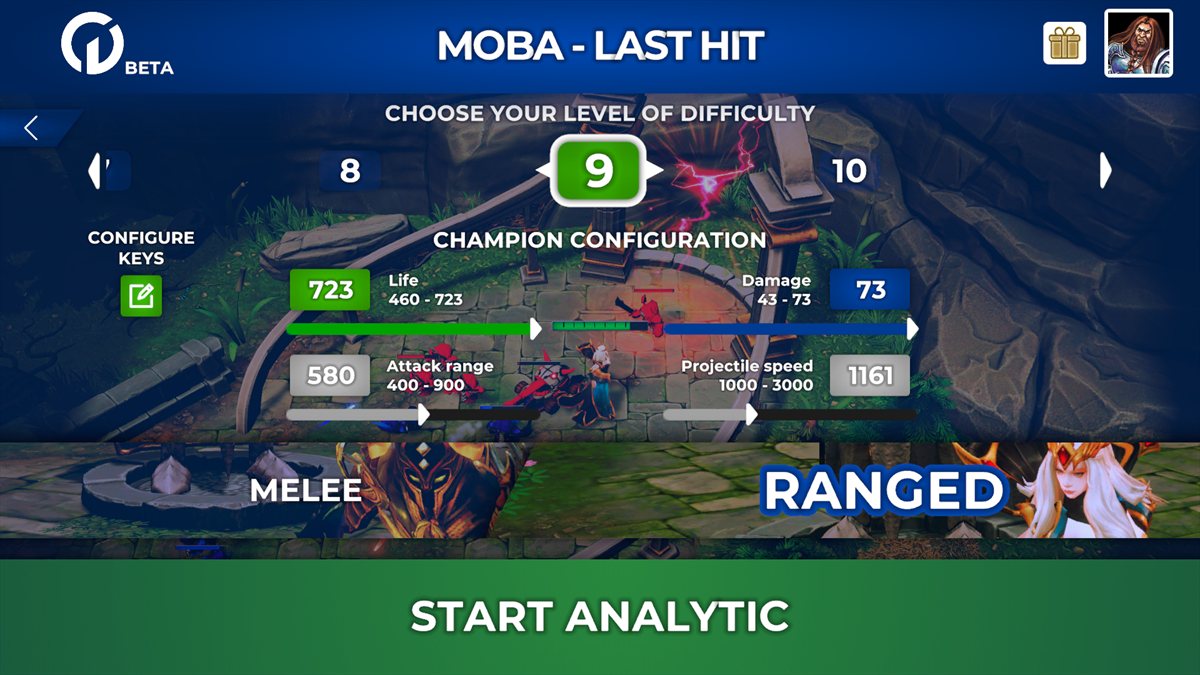
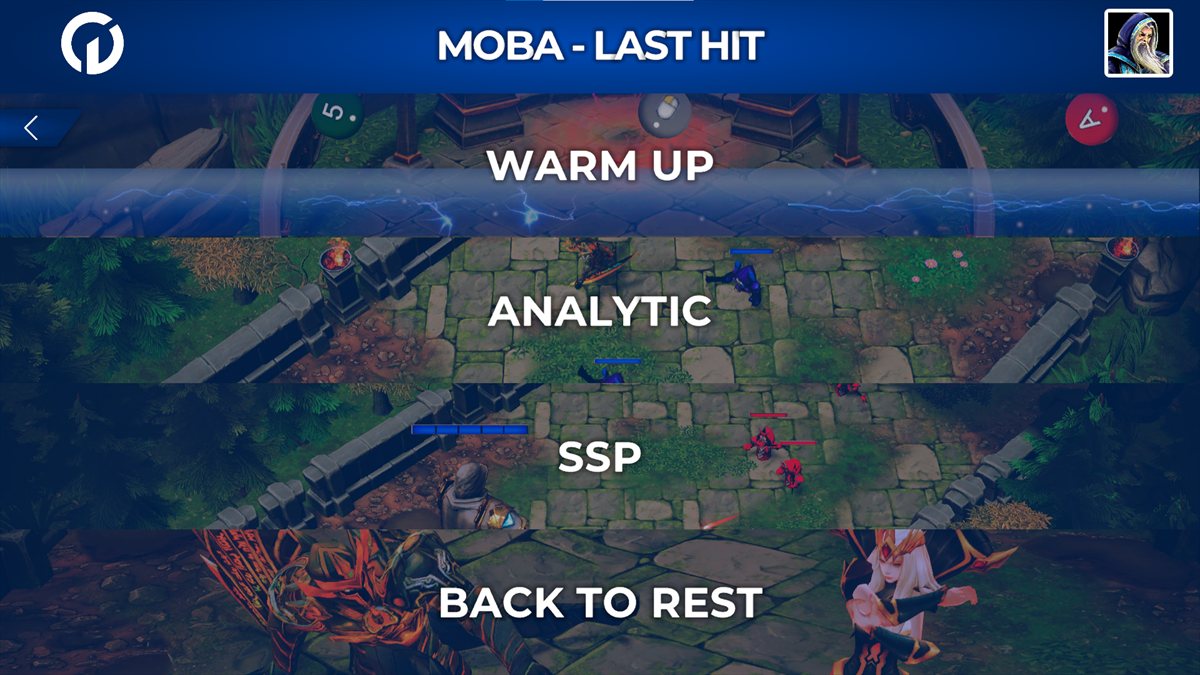
I didn’t propose low-poly because it was on trend. I proposed it because I knew what a casual LoL player feels in their thumbs when something is heavy. The pivot was strategic, but it came from a player’s nervous system before it came from a deck.
The reframe I offered the team was a single question:
What’s the smallest version of this product that a real LoL player would close the laptop and tell a friend about?
Two decisions came out of that question.
Decision #1: Low-poly as the player’s contract
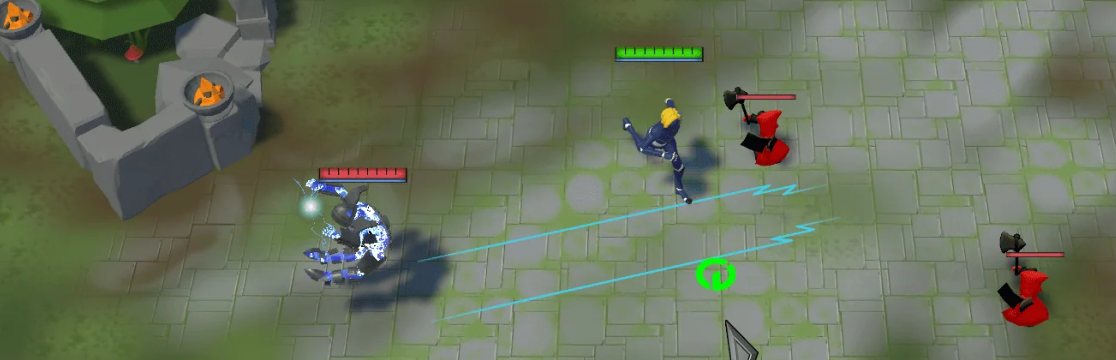
A radical pivot to a low-poly art style.
The Creative VP pushed back the way a Creative VP should: “Won’t low-poly make us look low-budget?”
My answer was the only one that mattered: “Only if we treat it like a compromise. If we commit, consistent silhouettes, deliberate palette, intentional motion, it stops being a constraint and becomes the thing players recognize us by.”
What low-poly actually bought us:
- Lightweight runtime. The app could open on the same laptop the player used for class. No three-minute tax.
- Visual ownership. We stopped competing with Riot on Riot’s terms. We started looking like ourselves.
- Iteration speed. The art team could finish things. Cohesion became reachable inside the timeline.
- A stylized identity, not a discount one. Monument Valley. Superhot. Stylization is a posture, not a budget.
This wasn’t a visual decision. It was a business decision wearing a visual coat.
Decision #2: The first match in under 60 seconds
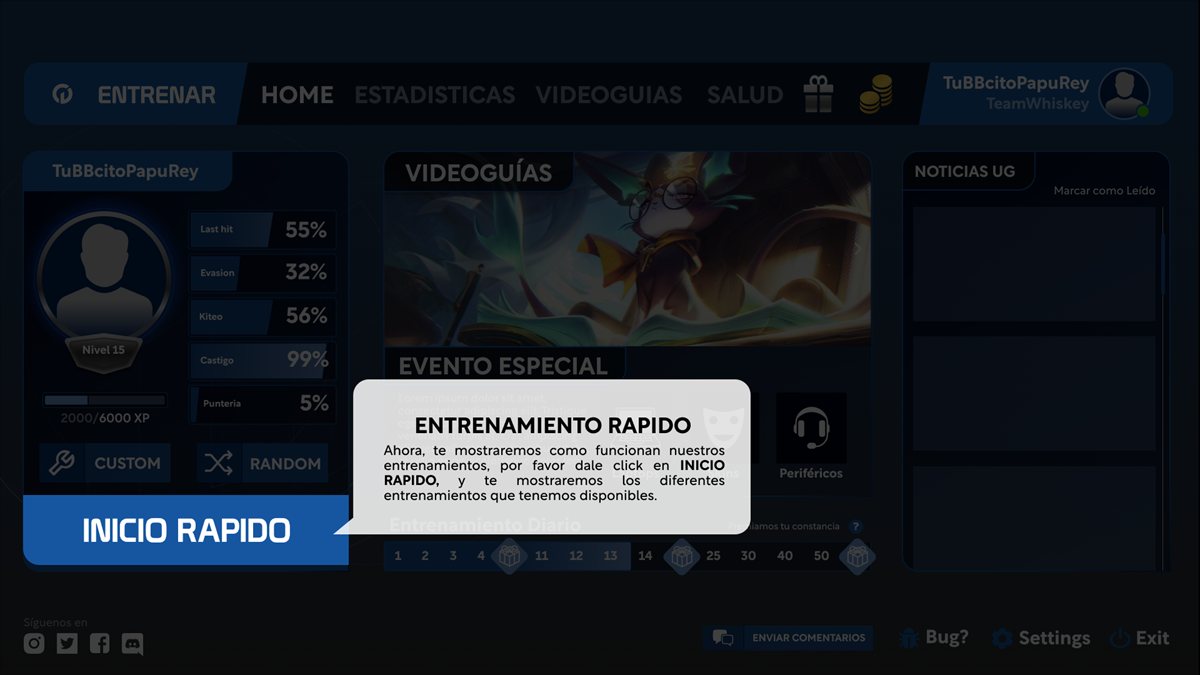
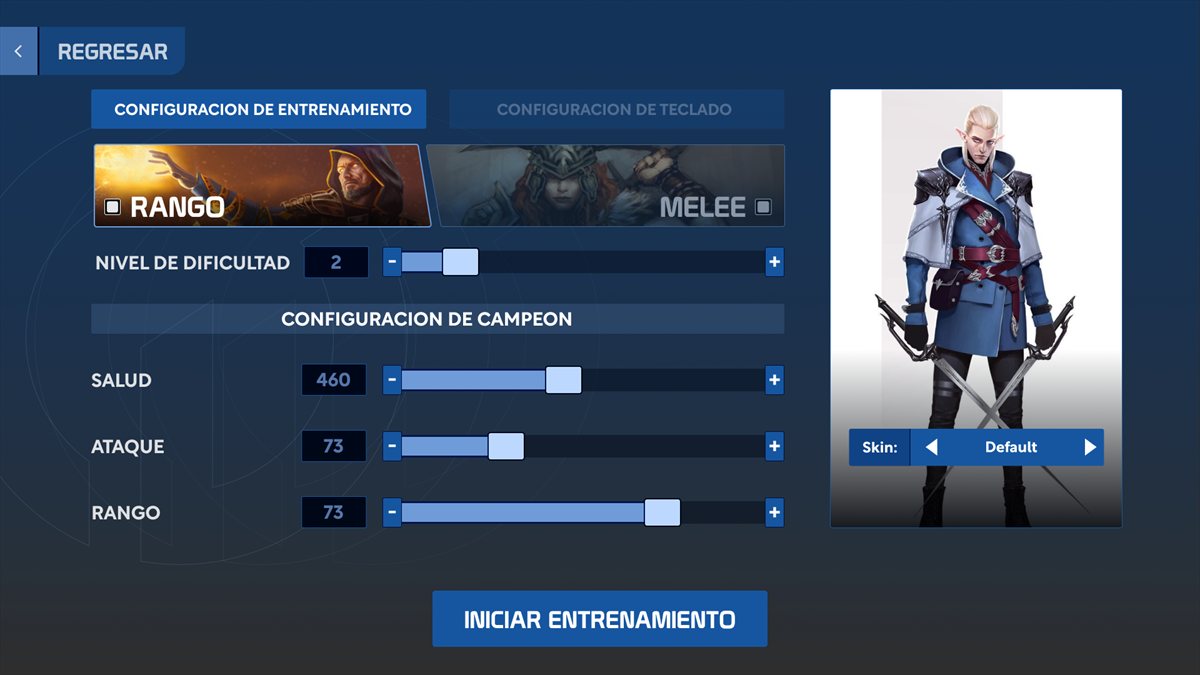
Instead of ten half-built features, one experience that actually delivered the promise: the first training match.
The Golden Path:
- Sign-in: under 60 seconds. Email or social. No verification gauntlet.
- Role selection: Top, Jungle, Mid, ADC, Support. The one piece of identity a LoL player gives you immediately.
- First training session: one expert-designed exercise on one mechanic: last-hitting, map awareness, positioning. Five minutes. Done.
A player who’d never heard of United Gamers could go from URL to “I just felt myself get better at this one thing” in under ten minutes. That’s the loop. Everything else, social, ranking, marketplace, got cut, deferred, or hidden until we had earned the right to add it.
The Golden Path wasn’t a UX framework I imported. It was the shortest path from a casual player’s curiosity to a casual player’s “oh, this is for me.”
5. Designing the moment a player and an investor both believe
With the strategy locked, I built the new MVP for two audiences who needed to feel the same thing for different reasons.
The player needed the product to respect them.
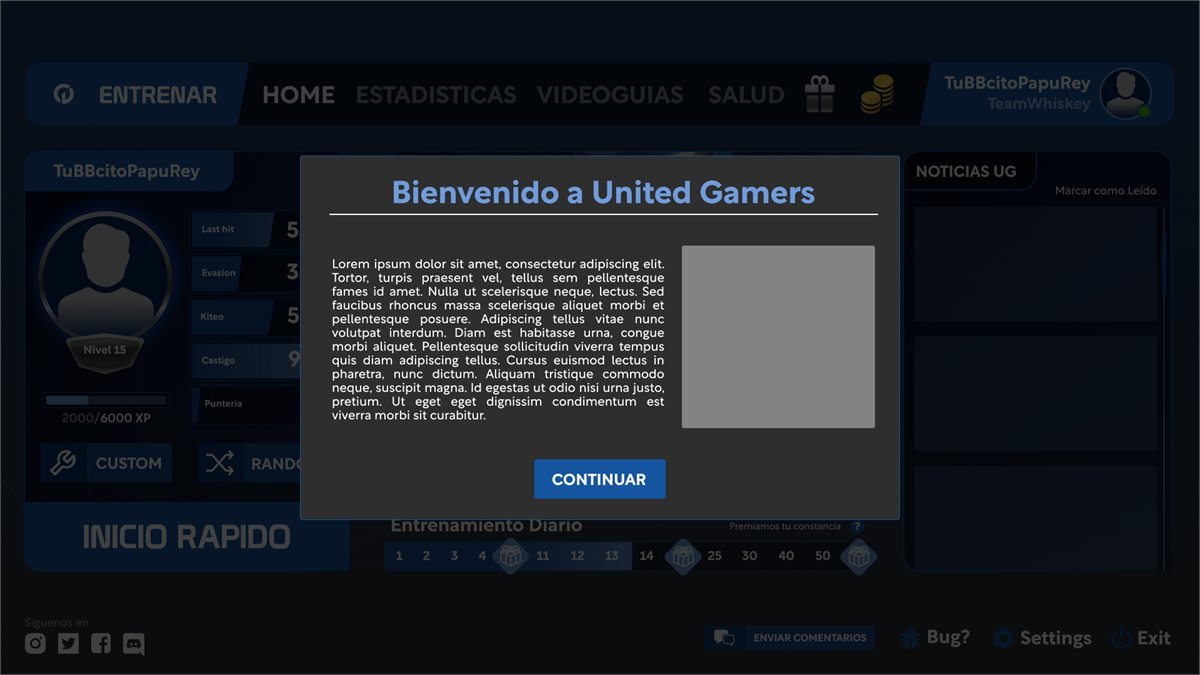
- Frictionless entry. Landing → role → first session in under 60 seconds. No tutorial wall. No content gate.
- Immediate proof. After the first session, a hexagonal skill chart, mechanics, map awareness, decision-making, that told the player something real about themselves they didn’t know walking in. That’s the hook. Not the gamification. The mirror.
- One CTA per screen. “Start training.” “Continue.” “See my results.” A tired player after a bad ranked game can find the next move with one eye closed.
The investor needed the product to feel inevitable.
Investors don’t fund slides. They fund the moment a product stops looking like a hypothesis and starts looking like something a person they know would actually use. The redesign gave them three things to point at:
- A coherent visual language that read as a deliberate brand, not a budget.
- A live demo that didn’t crash. The thing that ends most pitch meetings was no longer in the room.
- A clear answer to “what is this?” Science-backed training, one match away from feeling it.
The low-poly aesthetic became a recurring talking point in investor meetings. Not because it was pretty. Because it was a signal that the team had made a strategic call and held it.
6. The receipt, and what it was really proof of
Internal testing first. Then a small beta cohort. Then the room that mattered.
Players:
- Over 80% of testers completed the first training session. The previous version’s number was zero.
- The qualitative feedback shifted from “this is broken” to “I love how this feels.” That sentence is the entire job.
Investors:
The redesigned product became the pitch. Not a backdrop to it. The centerpiece. The founders stopped describing what the product would be and started showing what it was:
- A live demo, start to finish, in under five minutes.
- The hexagonal skill chart, used as a real diagnostic in the room.
- A user flow that didn’t need a translator.
United Gamers closed a €250,000 seed round.
The capital paid for engineers, social features, and the runway to find product-market fit. But the receipt isn’t the headline.
The headline is: the founders trusted a player’s instinct over their own theoretical model, and the market trusted what came out the other side.
That’s what fundable products feel like. Coherent enough that someone who’s lived the use case can vouch from inside.
7. What this project taught me about closeness
The closer you are to the user, the less you have to argue.
My biggest contribution to United Gamers wasn’t a wireframe or a style frame. It was that I’d been the player for five years before I sat down at the table. Every strategic call, low-poly, the under-60-second onboarding, the cut features, was anchored in something I’d felt in my own thumbs, not something I’d read in a research deck.
This is the thing nobody puts on a job description: when the person leading product is closer to the user than the rest of the team, decisions stop being debates. They become recognitions. The founders didn’t get convinced. They got reminded of who they were building for.
Constraints don’t generate creativity. Empathy under constraint does.
Low-poly wasn’t the creative move. The creative move was refusing to ship a product that asked a casual player to wait three minutes for the privilege of practicing. The constraints just told us which form that refusal had to take.
The next version of this work
The pattern at United Gamers, bringing someone closer to the user than the team currently is, keeps showing up in the work I take on. WTFast had it. Party Parrot World had it. The founders who hire me now hire me for it on purpose. That’s the through-line: not strategy, not visuals, not even product sense. Closeness to the seat the product is being built for, and the willingness to redesign around what’s actually felt there.
The interface is downstream. The trust is what gets built first.